
The Challenger program
Who it is for
For anyone deciding whether to apply
Before
Capped where you are.
Weeks 1 to 4
Build remote. Evaluated weekly.
Week 5
Arrive in Austin. Covered.
Weeks 5 to 7
Guaranteed interviews at $200K+, booked for you.
Weeks 8 to 9
Interview loops. Offers earned.
Week 10
Demo Day, in front of the people who hire.
Same engineer
Next level. Ten weeks, evaluated every one of them, in front of the people who hire.

What we select for
The cognitive assessment
A timed test of how you think, not what you have memorized.
We look for the 95th percentile and above.
Existing years of experience earn bonus points.
How you work with people
You defend your architecture to staff every week and sit in mock culture rounds with the Career Development team.
Partners hire the engineer they can work with under pressure.
80 to 100 hours a week
A new project every Monday, a deadline every Sunday, and an evaluation every week against a clear standard.
The pace is the program. It is why partners trust what comes out of it.
What hiring partners say
Peak6

We are recruiting. If you are brilliant, resilient, and low ego - come build with us.
Alpha School

That's the DNA Alpha School hires for and that's why we hire again and again from Gauntlet.
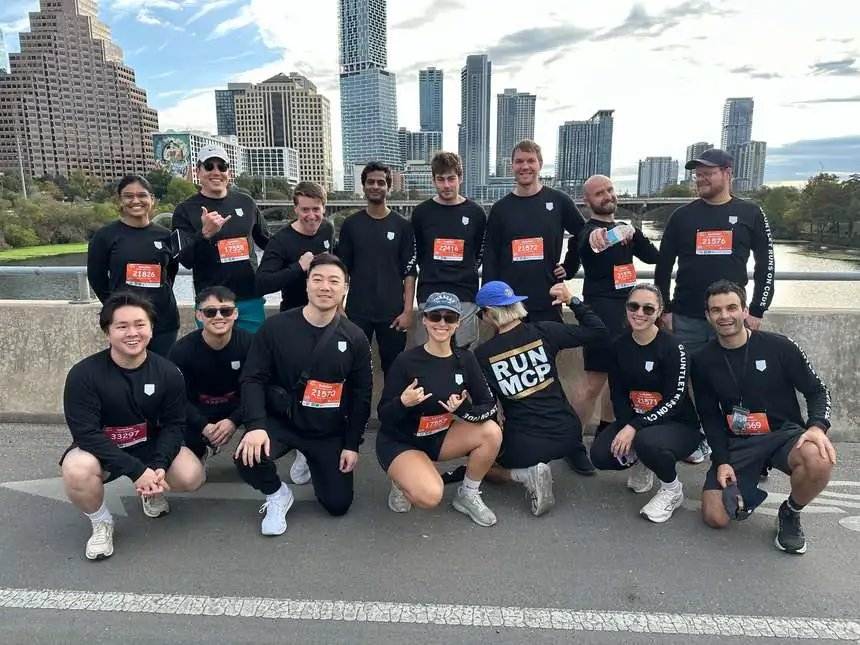
Who walks in
You have been the strongest engineer in the room for years.
Nothing where you are is hard anymore, and the next challenge is not on offer.
Several principal, distinguished, and senior engineering leaders have attended and completed our program.
Big team, narrow scope. Autocomplete is the ceiling on your tooling, and a feature takes a quarter.
You cannot build or own anything end to end.
Many who end up participating were a cog in the machine: a narrow scope, no end-to-end ownership, and requirements handed down from the ivory tower.
Bank, healthcare system, or other regulated enterprise. Agentic tooling is blocked or under review.
The work that matters next is happening somewhere else.
You manage people and you miss building.
The team you want to run is a team of agents, with you as the engineer.
You write code every day and the title says something else. Data, analytics, research, hardware.
The work is real, and the resume does not read like a software engineer's.
Champions have come from analytics, research, and hardware.
How we decide
A timed cognitive aptitude test, not a coding puzzle. It measures how you reason, and it does not care what language you write.
We look for the 95th percentile and above. Existing years of experience earn bonus points.
The admissions team reads what you have built and owned: shipped production work, public code, the scope you carried.
If we have questions we ask for more, for example a resume or public projects. Typically we look for three or more years of software engineering experience, with room for the exceptional without a traditional background.
If you are one of the 2% who make the cut, you hear it from us with next steps.
If not, you hear why we made our decision, and you are invited to join our Scouts program. Nobody is left guessing.
Those that are truly living, breathing, eating, sleeping AI are still diamonds in the rough. To find them, and to really ensure they've dug as deep as we need them to, was difficult for us to not only source, but screen.
Apply now
Application received.
Application received.
Fit
This is not a bootcamp. You arrive able to build.
80 to 100 hours a week, ten weeks, full time.
Weeks five to ten are on site.
Interviews are. Offers are earned.
Questions we hear
The bar is the same for everyone, and it is not a junior bar. Several principal, distinguished, and senior engineering leaders have attended and completed the program. What changes is how much one engineer can ship, own, and defend in a week.
That is what the first four weeks are for. You inherit real systems and ship against them, with a bar every Monday and a deadline every Sunday. Nobody arrives current. Everybody arrives able to learn fast.
On reps, yes. On judgment about what to build and how to verify it, no, and that is the scarce part. Ten weeks on the current stack closes the gap faster than any evenings-and-weekends plan.
Typically we look for three or more years of software engineering experience, with room for the exceptional without a traditional background. Show us the work. The assessment and your work decide, not the degree.
Tell us on the application, including whether you will need visa sponsorship now or in the future. Needing sponsorship does not rule you out on its own. We review it alongside the rest of your profile.
Your score is read alongside your profile, never on its own, and existing years of experience earn bonus points. If you do not clear the bar, we tell you where you landed by band, not by number. Take it rested.