Gauntlet
Check Application StatusCheck Status

The Challenger program
What you build

For anyone deciding whether to apply


What you build.
Who you become.

The first principles of building with AI and building AI systems,
taught by shipping every week into codebases that already exist.
Here is what the ten weeks contain,
and the engineer who walks out.
Apply now

Every week

An ambiguous requirement on Monday. A defended production build by Sunday noon.

Scroll

What we teach


Two disciplines,
taught as one

The first principles of building with AI,
and of building AI systems.
Taught inside codebases that already exist.

Building with AI

  • Spec firstWrite what the system must do before anything is generated.
  • Coding agentsClaude Code, Codex, Cursor and Grok, driven inside real codebases.
  • Tool calling and MCPAgents that reach the systems around them, not just the editor.
  • ObservabilityEvery run traced from the first day, not after an incident.
  • EvalsThe tests that decide what ships.
  • The software factoryPipelines that generate, test and deploy code on their own, with your guardrails.

Building AI systems

  • Grounded agentsRetrieval over your own data, so every answer cites something.
  • Multi-agent architecturesA supervisor and workers that decompose real work.
  • Evals wired into CIA regression blocks the merge automatically.
  • Adversarial securityRed teams that find and document vulnerabilities, attack and judge kept separate.
  • Small models you trainDistill a frontier model into one you own and publish.
  • Multimodal generationImage, video, voice and music, produced as part of a product.
  • Production scaleCaching, token cost, rate limits and latency under real load.
Adjusted ahead of every cohort.
What is current is what is taught.

How it is taught


Nothing starts from
a blank slate

You inherit real systems with real constraints.The bar is binary: it works as specified, or it does not.
  • Brownfield

    You inherit an existing codebase with its debt and its constraints, never a blank repo.

  • Defended

    You design from an ambiguous requirement and defend the design to staff in an interview.

  • Production standard

    Code quality, documentation, observability and evaluation at a professional level.

  • Binary

    No partial credit. The system works as specified, or the week is not passed.

Live instruction averages 15 hours a week.
The rest is building.
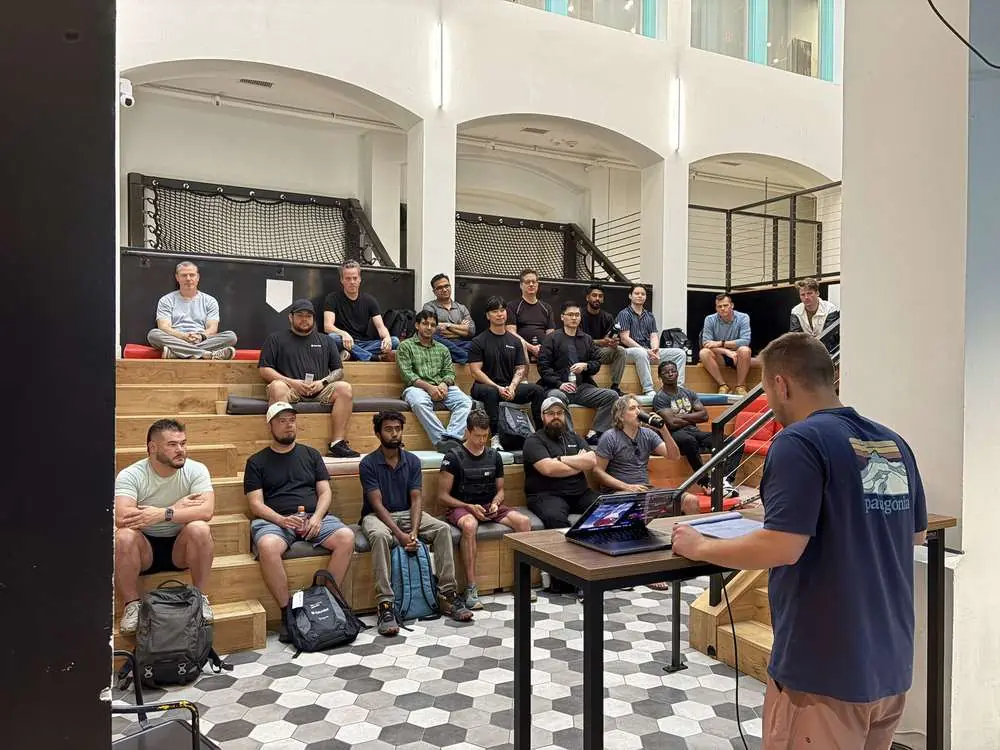
An instructor at a standing desk teaching Challengers on the atrium bleachers at Gauntlet HQ
Live instruction in the atrium, Gauntlet HQ

The ten weeks


Three parts.
Ten weeks.

Foundations remote. Partner projects and interviews in Austin.Then your own product, in front of the people who hire.

Curriculum as of Cohort 8. Adjusted ahead of every cohort.

Weeks 1 to 4Foundations, remote

Build into a system that already exists

You inherit a mature codebase in week one and build an AI co-pilot into it.Every week after that goes deeper into the same system.
  • Week 1: spec, coding agents, tool calling, MCP, observability and evals.
  • Week 2: grounded agents, a multi-agent graph, and evals that block a bad merge in CI.
  • Week 3: an autonomous red team that finds, tests and documents vulnerabilities.
  • Week 4: harnesses and the software factory, then real production AI failures diagnosed under pressure.
Weeks 5 to 7Partner projects, Austin

The work turns outward

Partner-style projects, delivered at pace.Guaranteed interviews for $200K+ roles are booked for you from week five.
  • Week 5: rapid delivery, tool selection and quality assurance with AI, against a partner's expectations.
  • Week 6: a demo-scale system re-engineered for production: load, caching, token cost, rate limits.
  • Week 7: a frontier model distilled into a small open model you train, evaluate and publish.
Weeks 8 to 10Product and capstone, Austin

Your own product, in front of the people who hire

Week eight shifts from models to a product.Every asset generated, judged by whether a peer would use it.Weeks nine and ten are the capstone.
  • An original AI product, conceived, built and presented under real constraints.
  • Product management principles first, so you can define a problem worth solving.
  • Demo Day, week ten: a live demonstration to instructors, peers and hiring partners.

Who you become


An engineer who can do
the whole job

Not just the code.Define the problem, architect the solution, evaluate the result, and defend it to the room.

Walks in

Walks out

Takes the ticket

Writes the spec

Types the code

Directs the agents that write it

Tests by hand

Evals gate every merge

A feature a quarter

A system a week

Explains it to engineers

Defends it to staff, demos it to partners

Prompts a frontier model

Trains and ships a small model of your own

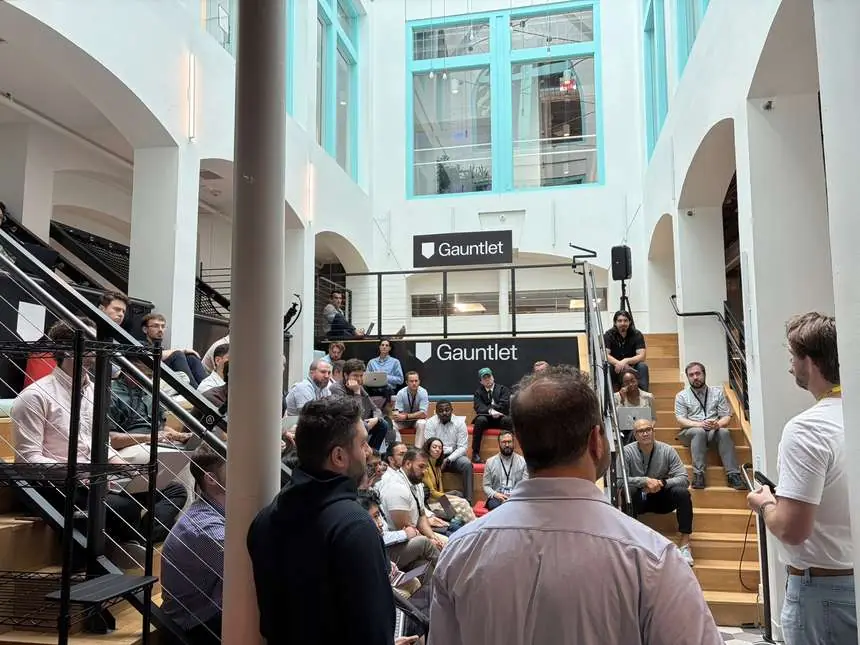
A full atrium at Gauntlet HQ during a hiring partner visit
Hiring partners in the atrium, Gauntlet HQ

The only title the program gives

A Champion is an engineer who takes an ambiguous requirement to a defended production build, and does it in front of the people who hire.

Champions have left as Directors and VPs of Engineering, into technical operating roles at a private equity firm, and into early-stage companies.

Abhay Dalmia, VP of Engineering at Nerdy

What a hiring partner sees

We've shifted our dev cycles from monthly to almost daily. That's a level of iteration we've been able to achieve with the Gauntlet engineers.
Abhay DalmiaVP of Engineering, Nerdy

Apply now


Start your application

Submit this form and the assessment link lands in your inbox.

Questions we hear


Asked about
the work itself

Do I need a machine learning background?

No. This is an engineering program, and the bar is engineering judgment. You will train and publish a small model in week seven, and you learn what you need that week.

Which stack and which tools?

The current ones, and they change ahead of every cohort. Today that is Claude Code, Codex, Cursor and Grok, used inside systems written in whatever they were written in.

What language do I need?

Any. You inherit existing codebases rather than choosing a stack, and the assessment does not care what you write. What carries over is how you reason about systems.

How much of the week is instruction?

About 15 hours live. The rest of the 80 to 100 hours is building against a Sunday noon deadline, with office hours and mock interviews in between.